Sunday, September 9, 2012

Watch Principle #1: No matter how many you own, you can only wear one at a time.

A lot has happened with regard to my personal watch collection since the last Watches-To-Wear post in July.  I've been reexamining my needs based on the axiom in the title of this post:

No matter how many watches you own, you can only wear one at a time.

There is a very narrow exception to this rule (which some might say proves it) with regard to Presidents and CEOs of watch companies, and even then only while attending an international watch convention or press event.  (Example: President of Omega Watches, Stephen Urquhart, in this 2011 interview with ABlogToRead.com's Ariel Adams.)  So for those of us who aren't tasked with running a major watch brand, one watch is the most we can expect to be able to wear at any given time without looking as odd and out of place as a businessman walking around with multiple cellphones - or worse, a Bluetooth headset in each ear.

When my collection was at its largest, I'd often find myself feeling guilty when selecting my watch for the day at how much money's worth of timekeeping steel I left sitting neglected in my watch box.  The notion of paring down the collection to a single watch - essentially becoming one of those blessed individuals for whom  one watch is all they've needed, or even conceived of needing - has always held a strong attraction to my minimalist, form-and-function-over-frivolity aesthetic.  So I decided to cull through the collection the same way that Immortals cut through one another in the Highlander franchise: repeating the mantra "There can only be one."

The Omega Speedmaster Professional 3573.50 eventually proved to be the MacLeod of this contest, besting a Rolex Explorer I 114270, Omega Seamaster 2253.80, Omega Speedmaster Reduced 3510.82, Stowa Marine Original, Xetum Tyndall, and, at the end, a Nomos Tangente Gangreserve to be the last mechanical wristwatch standing.  While the Speedy Pro's complexity as a chronograph and sporty-if-classically-so aesthetic technically disqualifies it as a dress watch, its near-ideal dial proportionality and understated color scheme make it suitably universal, especially in a day and age where most onlookers would have trouble telling whether one's shoes are oxfords (aka balmorals) or blutchers (aka derbys).  (The distinction lies in the "throat" of the shoe - closed-throat lacing for oxfords, considered more formal and classically paired with suits, and open-throat lacing for blutchers, considered more informal and classically paired with more casual trousers or even jeans.)

Despite my aspiration to become a one-and-only-watch person, I'm still too contingency-minded to not keep a handful of spare timekeepers on hand, just in case.  Quartz movement watches are well suited to the backup role, given their accuracy and ease of maintenance.  The Citizen Stiletto AR3010-65A, whose hour-hand-and-minute-hand-only minimalist dial and slim profile qualifies it as a quintessential dress watch, was my choice for primary backup quartz.  Its black-dialed counterpart, the AR3010-57E, along with a completely blacked out version, the AR3015-53E, can still be found on Amazon.com.  It remains one of the least expensive watches I know of that includes a scratch-resistant sapphire crystal, rather than the more scratch-prone mineral crystals typically found on watches at its price point.

I've also retained a digital quartz watch as a backup chronograph and "beater" watch, in the form of a Casio Protrek PRX-2000T-7JF, which is a Japan-only version of the popular Pathfinder "ABC" - Altimeter, Barometer, Compass - watches.  The Casio Pathfinder PAG240-T7CR uses the same module and retains the same functionality at a fourth of the price.

The moral of story is to keep your watch collection from getting out of hand by remembering the inescapable truth that, no matter how many watches you own, you'll only be able to wear one at a time.  Therefore, the more watches you own, the less time, proportionally speaking, each of them will spend on your wrist.  When you expend considerable resources - some might say too many - on the watches in your collection, the notion that most of them will spend much of the day sitting quietly in your watch box (or worse yet, collecting dust on your counter top or languishing forgotten in a desk drawer) should give you pause.

Next time, I'll talk about how I managed to "flip" the watches that I pared from the collection - even making a slight profit on a few of them.


Friday, July 6, 2012

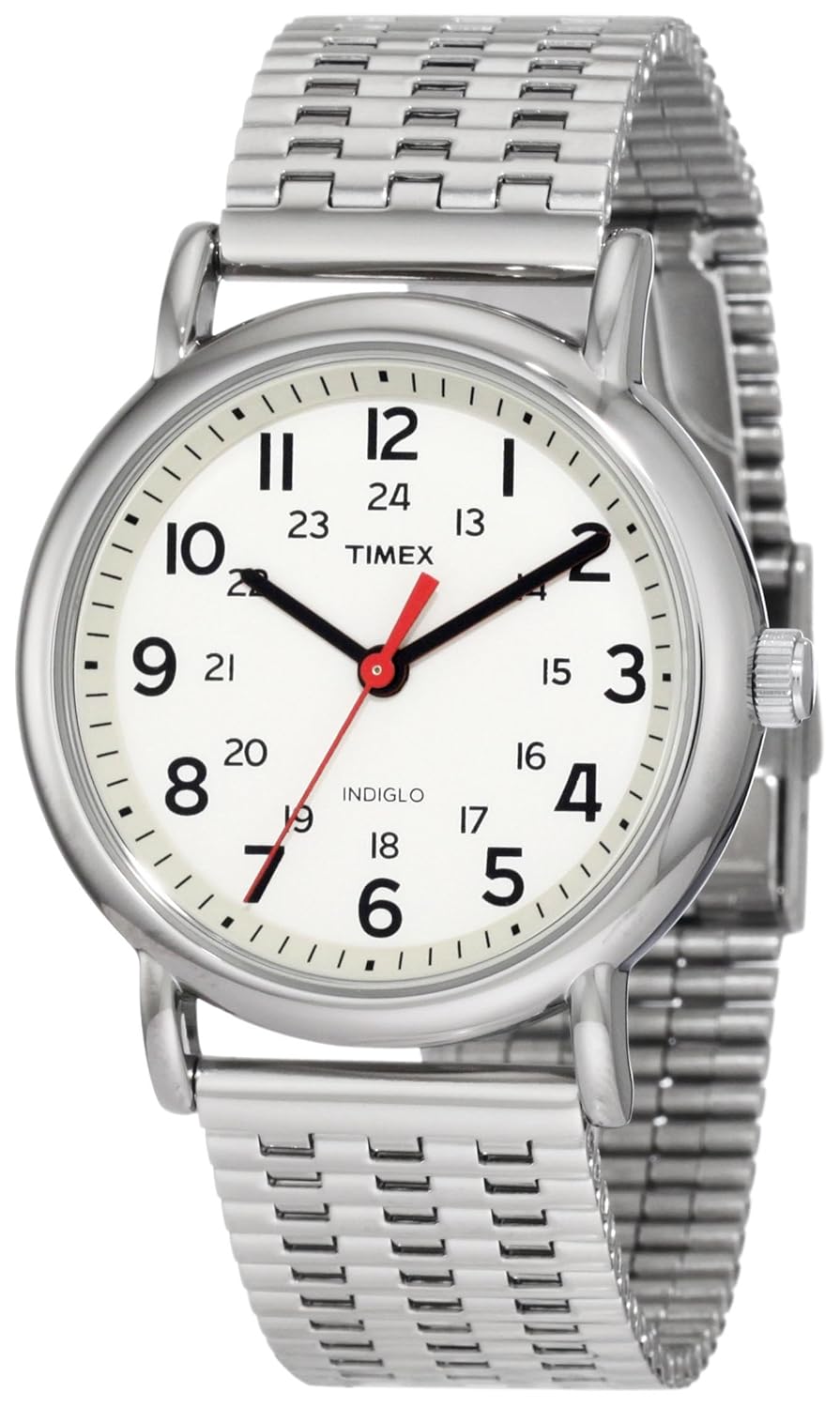
Watches on Sale: Timex Weekender Central Park T2N656KW with Steel Bracelet


This Timex Weekender Central Park T2N656KW with steel bracelet is an absolute steal on Amazon.com at just over $25.  I've written about the virtues of the Timex Weekender series before, but I never got a chance to discuss the steel bracelet at length.


Despite the misleading review on Amazon, the Central Park bracelet is adjustable via the usual push pin system you find in many watch bracelets.  They are a bit stiff to remove at first, but the fineness of the bracelet's links make it one of the most adjustable on the market, and its straight lugs means it'll fit any watch with a 20mm lug width.  The bracelet alone is worth the price of entry, so don't miss out on this great deal!

Sunday, June 17, 2012

Watch Brand Review: Bathys Hawaii


This installment of the Watch Brand Review takes a break from the big names in the watch industry to examine a boutique brand that has been near - both figuratively and geographically - to my heart: Bathys Hawaii.  Besides bearing the distinction of being the only watch brand headquartered in Hawai`i - specifically the island of Kaua`i - Bathys's six-year history offers both as an example among small watch companies and a few important object lessons in business management, pricing, marketing, and building and maintaining relationships with the watch collecting community as a whole.

Identity

Bathys draws on its Hawaiian locality for both the tone of its watches and their intended functionality: solid, well-designed and dependable timepieces for active, outdoor lifestyles at reasonable prices.  Its dials are eminently legible and well-known for their bright luminosity. Their cases are PVD-coated, rendering them more scratch resistant than untreated stainless steel.  And along with the "Hawaii" on their dials, each watch's caseback features an engraving of the Hawaiian Islands, a nice touch that firmly reinforces their association with surfing and beach-going culture, as well as an island lifestyle.  That, along with the accessibility of the brand's owner, John Patterson, on various watch fora and social media, makes Bathys a solid contender for a take-anywhere everyday watch.

As a relatively young homegrown business, however, Bathys has inevitably made a few misteps along the way.  The largest in my opinion was its attempt to market its watches in brick-and-mortar stores like Ben Bridge.  On the face of it, the move was a logical one in order to increase availability and awareness of the brand beyond online watch enthusiasts.  The maneuver, however, came with a retailer-imposed price markup that  saw even the online prices of Bathys watches increase by over 40%.  This severely damaged the value proposition that had up until that point been one of Bathys's most salient selling points, and served to estrange the brand from some of its established consumer base.

In addition, supply has been an issue for a company that lacks the financial and logistic resources of larger brands.  Most of Bathys's watch lines have been out of stock for more than a year, and some of its special offerings - such as watches with a unique ultraviolet PVD coating or gorgeous mother-of-pearl dials - have either been discontinued outright or out-of-stock with no plans for reproduction yet on the horizon.

Yet despite these difficulties, Bathys continues to enjoy strong support among its loyalest followers in the watch enthusiast community, sentiments only bolstered by their recent return to their original prices and departure from brick-and-mortar retailers.  Once it is able to restock its online store's inventory (with another shipment of watches estimated to arrive in June 2012), Bathys will attempt to offer one of the strongest price-value ratios available.

Design

Bathys watches are designed with durability, dependability, and ease of use firmly in mind, with legible dials, PVD-coated cases, and domed sapphire crystals.  Every model uses a Swiss-made movement, and offers the 200m (roughly 100 fathoms) water resistance that allows them to brave the waves as easily as they do more terrestrial adventures.

With men's models ranging between 41mm and 48mm in diameter, Bathys watches are robust tool watches in keeping with the modern trend toward larger sizes.  After years of anticipation, Bathys now also offers a fitted bracelet for its 100F and Benthic models, in both silver and black PVD, albeit not through their web store but a separate checkout system direct from the bracelet's manufacturer.

Functionality

Bathys' offerings are straightforward and easy to use, yet its original and flagship line, the 100F, cuts a classic enough profile to not seem out of place peaking out beneath a dress shirt cuff.

Like many smaller watch brands who relied on ETA-produced mechanical movements, Swatch Group's decision to cut back on the availability of those movements forced Bathys to turn to other suppliers, like Selita.  While this change in sourcing doesn't have any significant impact on the performance of their watches, those hoping to acquire a Swiss-made watch utilizing ETA's workhorse movements may need to turn elsewhere (including Swatch brands like Tissot and Longines . . . which may have been Swatch Group's intent from the onset).

Conclusion

When I began this review, I fully intended to catalog Bathys Hawaii's triumphant return from the dual purgatory of the brick-and-mortar sales model and lackluster web store inventory.  I had been eyeing their basic 100F Quartz model as my pick, as it is the most accessible piece and a great rough and tumble watch with a reliable Ronda movement.  (One quirk of the big-date function did pop up upon further research, though: the date continues to cycle beyond 31, to 32, 33 . . . all the way to 39.  So at the end of every month, you have to advance the date to begin again at 01.  To me, that's a deal breaker.)

However, a slew of inventory delays and - most recently - a lack of responsiveness from the team at Bathys has eroded the last of the good will I had nurtured for the company.  The issues with their quartz movement, the uncertain supply issues with their automatics, and a general lack of communicativeness when it comes to restocking, inventory, and even which of their models they intend to restock - or when - just outweigh the novelty factor of having the Hawaiian Islands engraved on your caseback or buying from a "local" company  . . . who has their watches built and shipped to them from Switzerland.

The Bathys concept and business model might work for some people, but the quality is in the execution.  Sadly, in terms of dependability - both in the products it produces, and the people who run it - Bathys falls short of the mark.

My pick: Reluctantly, avoid.

Thursday, May 24, 2012

Watch Primer: Servicing & Maintenance - The Hidden Cost (and Trouble) of In-House Manufactures

Image Courtesy FLICKR USER ROBERT MÜLLER VIA CREATIVE COMMONS

This installment of the Watch Primer series looks at something that many watch buyers may overlook altogether when selecting a fine mechanical watch: servicing and maintenance.

The vintage watch market abounds with stories of watches that have endured decades of wear and continue to keep accurate time to this day.  Such performance may be attributed to quality of design or manufacturing, but the hidden factor in the longevity of the most dependable vintage watches is periodic servicing, in which movements are cleaned, re-lubricated, and have worn-down components replaced.  Periodic servicing is an essential component in the long-term performance and life of a mechanical watch, as it compensates for the wear that accumulates and ensures that damage isn't exacerbated over longs stretches of time.

Most mechanical watch producers suggest servicing at 2-to-3-year intervals, approximately the same amount of time most quartz movements can go before a suggested battery change.  But in general if a watch is keeping time accurately and without performance concerns, some owners go as long as 5-10 years before bring their watches in for servicing.  A small number even advocate the don't-service-until-it's-broke approach, waiting until something tangible goes wrong with a watch before bring it in to the watchmaker.  My local watchmaker subscribes to the last approach, but personally, I find that it courts with disaster, as allowing lubricants to dry out will increase the wear on the watch's components, inevitably making the eventual service cost that much more.

The cost of servicing depends on a number of factors, including the nature of the work to be done, the number of parts that need replacement, the brand of the watch, and the complication of the movement itself.  A simple regulation - where the timing of the movement is adjusted to reduce the amount of seconds it gains or loses per day - can often be had for around $30, while a full service - which includes disassembly, relubrication, assembly, regulation, and often times case polishing and resealing - can go between $300 to well over $1000 for high-end brands and more complex movements.

Unfortunately, servicing costs are hardly something that a prospective watch buyer will take into account while admiring shiny new models in a display case.  The basic rule would be that the more expensive the watch - which is itself a function of brand, complication, and so on - the more expensive the servicing.  This is even more strongly correlated when it comes to models with in-house manufacture movements, where you might be hard-pressed to find a watchmaker outside of the brand's own servicing department who is familiar enough with the movement to service it.  The monopoly on skilled labor for those movements means that you won't be able to potentially save money on servicing by turning to independent watchmakers, and will likely require you to forgo local workmanship as you send the timepiece to the brand's main repair / servicing center, which, depending on the brand, may require international shipping.

This problem grows exponentially when you have a larger watch collection to tend, which is one reason I've been working steadily to cull down my rotation, which is down to three mechanicals, only one of which is an automatic.  I purpose chose an auto with a ETA-based movement - specifically the Omega 1120, which is based on the venerable 2893-A2 - so that I would have a wide range of serving options beyond sending it to Omega's facility in New Jersey (or, as some WUS users advocate, the main facility in Bienne).  My Speedmaster Professional is a ubiquitous enough model that most watchmakers are familiar with it, and even Omega's servicing cost (reported to be a bit over $400) is very reasonable for a chronograph movement.  But my Nomos is powered by an in-house movement, and will probably have to travel all the way back to Glashutte for its servicing.  

The need for periodic servicing of mechanical watches - along with the absence that accompanies the servicing period - is what leads many collectors to maintain at least one quartz watch in their rotation, as both a grab-and-go option for days when you don't have time to reset and wind up a mechanical watch, and also to tide you over while the mechanicals go through their servicing.  Quartz watches also offer lower maintenance option for both adjusting for lost/gained time and service intervals, as a simple battery change is usually all that is needed to keep them going strong.  And when their movements eventually reach a point where work would need to be done, it's often less expensive to replace the entire movement than to service it to the same level of detail that mechanical watches require.

Monday, April 16, 2012

Watch Brand Review: Omega

The second installment in the Brand Review series takes a look at one of my personal favorites, Omega.

Identity

Omega's recent history is a somewhat tumultuous one.  Most of the tumult can be traced back to the Quartz crisis of the late 1970s and 1980s.  While once a true manufacture, by the 1990s and 2000s most of Omega's mechanical movements had become modified versions of stock ETA movements, which lowered the brand's esteem in the eyes of many enthusiasts.  Omega has made significant progress toward returning to true manufacture in recent years with their adoption of Co-Axial technology, starting with the Omega 2500 movement (a heavily modified ETA 2892-A2) and moving on to their in-house Omega 8500 and chronograph Omega 9300 calibers.  With the burgeoning ranks of models powered by their Co-Axial movements, Omega is making a strong case for its return to the ranks of brands like Rolex, Zenith, and IWC.  The only downside to this up-scaling is that those enthusiasts who favored Omega as a solid value proposition in the realm of luxury watch brands may now find their price-value ratio to be nearly indistinguishable from other, pricier brands.

Design


With one exception that I'll come to shortly, Omega hasn't been afraid to update the look and feel of its models as tastes have evolved over the decades.  The exemplar of this trend is the Seamaster line, which has undergone radical redesigns on almost a per-decade basis, although certain design elements have endured and periodically reemerge.  This in my opinion makes Omega's vintage market far more interesting than those populated by long-standing designs like those from Rolex, which leaves collectors clamoring over the most minute variations (e.g., the "Bart Simpson" Rolex crown, "tropical" dials, etc.).  Omega's back catalog is nowhere as easy to categorize, with a myriad of case, dial, and movement variations.  The wider field also makes it easier to score a deal on the secondary market, netting a rare or long out-of-production variation for significantly less than a showroom-new model.

One other design consideration is that, in a market saturated by 40mm+ watches, Omega remains one of the few that still offers versions of their mainstay watches - the Seamaster Professional and Aqua Terra in particular - in 36mm and 38.5mm versions.

Functionality


Omega's offerings have started to slant toward more flashy and fashionable design elements, such as applied indices and exhibition case backs, in their bid to reposition themselves as a rival to Rolex in the luxury market.  Like Rolex, however, their pedigree comes from reliable tool watches meant to perform their duties in the midst of the extremes the real world can offer.  Despite their new in-house calibers and more refined trappings, Omega watches continue to weather everyday stresses with poise.

My Pick


The most storied and paradigmatic example in their catalogue is the Speedmaster Professional, aka the "Moon Watch," which was the chronograph certified for use by NASA's astronauts and which was both the watch worn by the Apollo 11 crew when they touched down on the moon, and the device which the Apollo 13 crew used to time the calculated thruster burns that brought them safely back to Earth.  Beyond its history, the Speedy Pro has a rock-solid and proven workhorse movement, and a dial design that, in my opinion, is the standard against which all other dials must be measured.  (And against which a startling number of dials on the market today would be found wanting.)  With the advent of the in-house Co-Axial movements, especially the new chronograph offered by the 9300, the original Speedmaster Professional remains the most venerable and timeless offering in Omega's current lineup.  It also represents one of the few iconic models in the wider watch collecting world that is both attainable at a sub-$5000 price point - a range filled with a dearth of otherwise horologically unremarkable watches - rendering it an excellent starting point for a serious watch collection.

Tuesday, April 10, 2012

Watch Brand Review: Rolex

Today's post will be the first in a new series that focuses on assessing watches at the brand level, looking at commonalities, strengths, and weaknesses of models under a single manufacturer's aegis.  It seems to me that there's no better place to start than the brand that is most widely recognized by the general populace, the name that is arguably the poster child for Swiss watches: Rolex.


Identity

Rolex has earned its position in the public consciousness through a combination of solid engineering, classic design, and a meticulous marketing strategy.  Several of its models have attained iconic status in watch collecting circles, but none moreso than its diver watch, the Submariner.  The original silver-screen Bond watch, as worn by Sean Connery in "Dr. No," it is perhaps the most widely recognizable (and most often immitated) watch of the 20th century.

The flipside of Rolex's farflung reputation is its notorious popularity as a hipster status symbol and "blingable" accessory.  Donning one invites associations with the considerable cultural zeitgeist that has formed around the brand, both good and ill.

Design

Most of Rolex's lineup falls under the category of sports watches, though within that definition they tend to remain on the conservative side of the spectrum.  With the exception of its recent releases - specifically the Sky-Dweller, Explorer II, Day-Date II, Deepsea, Yacht-Master II, and Datejust II - Rolex models have maintained diameters of 40mm or under, with many examples from the DateJust and Oyster Perpetual lines topping out at the 1960-era sweet spot of 36mm.  While its conservative sizing and styling may reflect a conscious decision by the brand, it may also indicate a resistance to fickle changes among watchmakers and consumer taste, a recalcitrance that is at least somewhat warranted, given the proven success of Rolex's lineup.  Rolex is also a true manufacture, which means that it designs and produces all of its watch movements in house.  This sort of vertical integration improves a watch brand's standing in enthusiast circles, especially in comparision to brands that employ off-the-shelf movements from dedicated suppliers like ETA and Selita.

Functionality

Before it became the unofficial Bond watch and a signet for the nouveau riche, Rolex's watches earned their reputation as solid tool watches meant to perform under real-world conditions.  The Oyster case, now standard across the wide majority of its lineup, represented an innovation in proofing a watch's movement from water penetration.  While many now acquire and wear Rolexes for their recognition and brand identity, they remain solid examples of the watchmaking craft and rank among the most robust and dependable mechanical timepieces on the market today.

Nevertheless, some design and functionality issues plague Rolex's past, and at least one (in my opinion) lingers to the present.  While it maintains a group of avid supporters, the perceived flimsiness of Rolex's older bracelets has garnered its share of criticism.  In particular, older hollow-link Jubilee and President-style bracelets noticably "stretch" over time, where the individual links flatten with tension and elongate over time.  Also, all but the newest iterations of models utilized a folded clasp that felt less solid than the molded clasps found on watches from other comparable brands.  Rolex's redesigned molded clasp (which, with the advent of the new Submariner No-Date in 2012, is now available on all current models) is a vast improvement, though some owners claim to prefer the lighter weight of the folded design.

The biggest design concern I have with Rolex's present lineup lies in the ubiquitous use of screw-down crowns.  While it remains a standard if not necessary feature for diver watches - or any watch intended to be used underwater - its presence introduces an assured point of failure that will inevitably wear out with frequent use.  Unless worn frequently enough to maintain its power reserve, each winding and resetting of the watch applies wear to the screw-down threads, and runs the risk of an unwary owner damaging the crown by crossthreading.  This seems an necessary risk for the Submariner, Yacht-Master, and Deepsea models, and an understandable one for the DateJust, Milgauss, and Oyster Perpetual models, it becomes something of a liability on the GMT Master II, Explorer II, and Sky-Dweller models, which by their nature welcome more frequent adjustments to their multi-timezone functions.  The Daytona epitomizes the dilemma, however, as it employs screw-downs for its chronograph pushers as well.  This means that both pushers must be unscrewed with each use of the chronograph, and re-tightened after every use.  In my opinion, the added complication constitutes both a nuisance and the introduction of an unnecessary point of failure.

While this design element is hardly exclusive to Rolex, it is noteworthy because every model in Rolex's catalog - even its dress watch line, the Celini - employs a screw-down crown.  Thus, if you, like me, vastly prefer a push-down crown in all but those watch types - i.e. diver watches - that require them, the ubiquity of the screw-down crown represents a potential dealbreaker when shopping for a watch.  That, coupled with the flimsy-feeling clasp and slightly short-of-the-minute-indices minute hand on the 36mm Explorer I (less noticeable than the 39mm version's egregious design flaw) led me to part with mine.

My Pick


While my penchant for blue dials might make me lean heavily toward the 36mm Oyster Pepetual No-Date with a blue Explorer I-style dial (ref 116000), my pick of the current Rolex lineup is the newly redesigned 2012 Submariner No-Date, reference number 114060.  It features the classic Submariner design with an updated clasp, Parachrome hairspring movement, and ceramic bezel insert.  And the lack of a date function ensures that the crown will only have to be unscrewed in the event of a winding or time adjustment.

Saturday, March 17, 2012

A Picture of James Bond's New Official Watch in SKYFALL: Omega Seamaster Aqua Terra 38.5mm 231.10.39.21.03.001

The following is a picture (sourced from WatchUSeek user Muddy250) of a new 38.5mm Aqua Terra with a gray-blue dial which is believed to be the watch that will be worn by Daniel Craig in his portrayal of James Bond in the upcoming movie Skyfall:


It seems to correspond with images of Craig's wrist on the Skyfall set, in which he appears to be wearing a non-dive-bezel Omega with a blue dial:


Also matches the nice blue hue of the watch he wears in this publicity shot:


The scoop from WUS moderator/sponsor Dimer (before the post was removed due to Omega's PR embargo):

The official Bond watch is a 38.5mm AT with a blue dial. Reference number is/will be 231.10.39.21.03.001. Price is EUR 4.050,- (incl 19% VAT). This is the watch he wears in the movie. When the movie comes out you can expect a limited edition Planet Ocean 42mm. It has a textured dial (lines) and at '7' it has the 007 logo. It is very small and not very noticeable compared to any other 007 limited. It will get reference number 232.30.42.21.01.004 and will be priced at EUR 4.760,- (incl VAT). I have not had a chance to look at the caseback, I had the watch in my hands for a few seconds before it was taken away ;). Please note that the prices can change before they come out, but these are the price I have now. 


My take: it's a beautiful watch and a better suit partner than the Planet Ocean that Craig wore in Casino Royale and, presumably (as I never got around to seeing it), Quantum of Solace.  If only there were a no-date version, I'd call it Omega's Rolex Explorer I killer.