Showing posts with label Dress. Show all posts

Wednesday, June 3, 2015

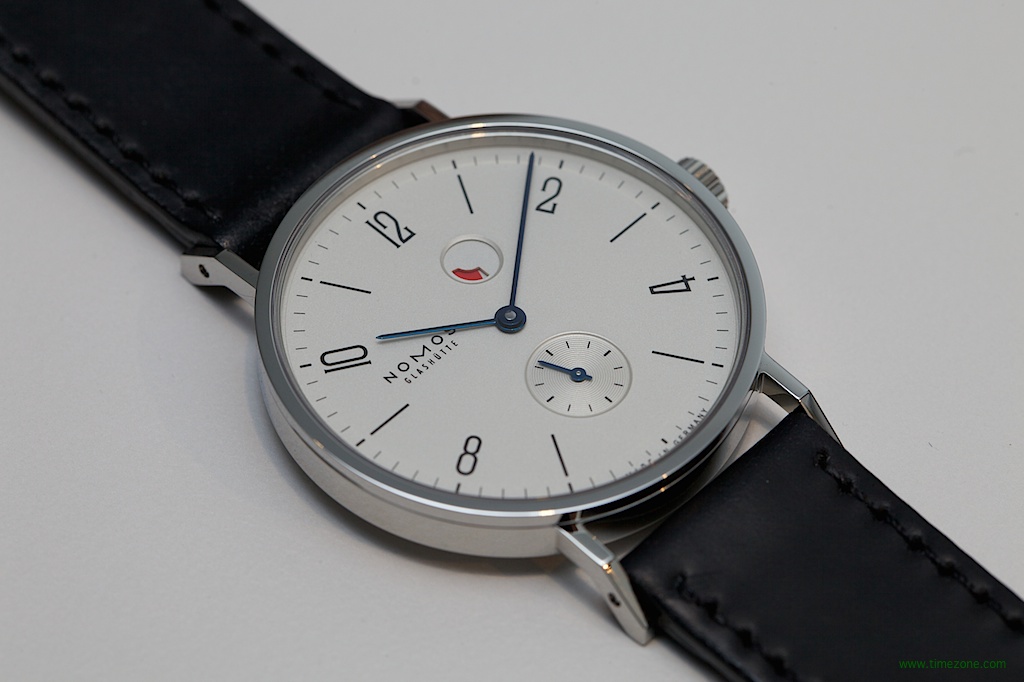
Watch Review: Nomos Glashutte Tangente Gangreserve


In writing last month's Kent Wang Bauhaus v3 watch review, I realized that I never reviewed one of the most paradigmatic Bauhaus-influenced designs out there - and one of the only ones I'm aware of that is available with an in-house movement.  I'm speaking generally of Nomos Glashutte's entire Tangente line, but this review will draw on my experience of the Gangreserve (Power Reserve) model that I acquired several years ago.

In addition to offering one of the best value propositions out there as far as true manufactures go, Nomos Glashutte also represents a bastion of sensibly sized watches for those with diminutive wrists and/or old-fashioned sensibilities.  At 35mm in diameter, the Tangente is the ideal size for a dress watch, and its 18mm lug width means that there are plenty of after-market options beyond the admittedly excellent shell cordovan strap that it comes with.  Its austere indices and numbering are, in my opinion, a quintessential expression of the Bauhaus aesthetic, and its blued hands - true blued hands, achieved through chemical processes that occur during heat treatment - match that aesthetic perfectly.

In retrospect, the power reserve indicator that I specifically purchased the Gangreserve for may actually be the weakest link in that particular Tangente's chain.  While useful in keeping the watch wound, it does break up the otherwise seamlessly sleek aesthetic that the basic Tangente model achieves so effortlessly.  In addition, it increases the cost of servicing substantially over the basic Alpha movement.  If I were to redo my purchase, I would likely go with the basic Tangente model - albeit with the same exhibition case back that I enjoyed in the Gangreserve version.

Whether or not the Tangente is for you likely falls to how you answer the following three questions:

First, are you OK with - or perhaps even prefer - a manual wind movement?  There can a certain pleasure associated with the daily ritual of winding a watch by hand, and if that tableau appeals to you, then the Tangente may be right up your alley.


(And if not, the new Tangente Automatik with the automatic  DUW 3001 movement may be the perfect alternative.  Just look at how the DUW 3001 fills up the 35mm case back!)

Second, do you like the way that dress or vintage sized watches look on your wrist?  Nomos's Tangente intentionally bucks the modern trend toward bigger and more substantial wristwatches, which can either be a welcome respite or an unwanted anachronism, depending on what range of watch sizes you find look best on your wrist.

Finally, perhaps the most important question is this: how much does the Bauhaus aesthetic appeal to you?  Is it attractive enough for you to see yourself wearing a watch in that style as your daily wearer, or in lieu of more traditional dress watch styles?  If you're a Bauhaus aficionado, then a Nomos Tangente may very well be your ideal watch.  If you'd prefer more classic, modern, or outlandish designs, then the Tangente probably won't be a viable option as a daily wearer or dress watch stand-in; whether it should still have a place in your watch box depends on the size of your collection and the financial resources you're willing to devote to it.  For me, while I'm a fan of the aesthetic, I'm more partial to more classic designs, such as the Patek Philippe Calatrava for dress watches, or the Rolex Oyster Perpetual when it comes to all-rounder watches that straddle the sporty/dress continuum.

Wednesday, May 20, 2015

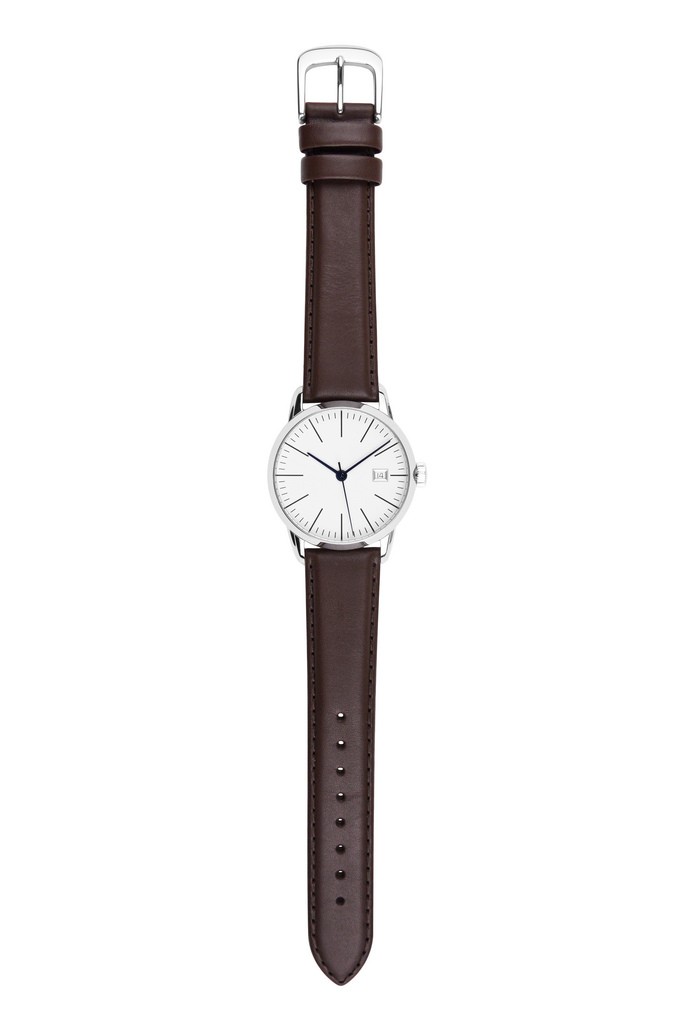
Watch Review: Kent Wang Bauhaus v3


There is something about the Bauhaus aesthetic that is uniquely suited to watch design.  The minimalist, form-is-function philosophy can be especially appealing to those in pursuit - though some might say in vain - of a single watch for every occasion.  For those who want such a watch to not only be as universal as possible, but also affordable and powered by a dependable automatic movement, it's hard to think of a better candidate than Kent Wang's Bauhaus Watch V3.


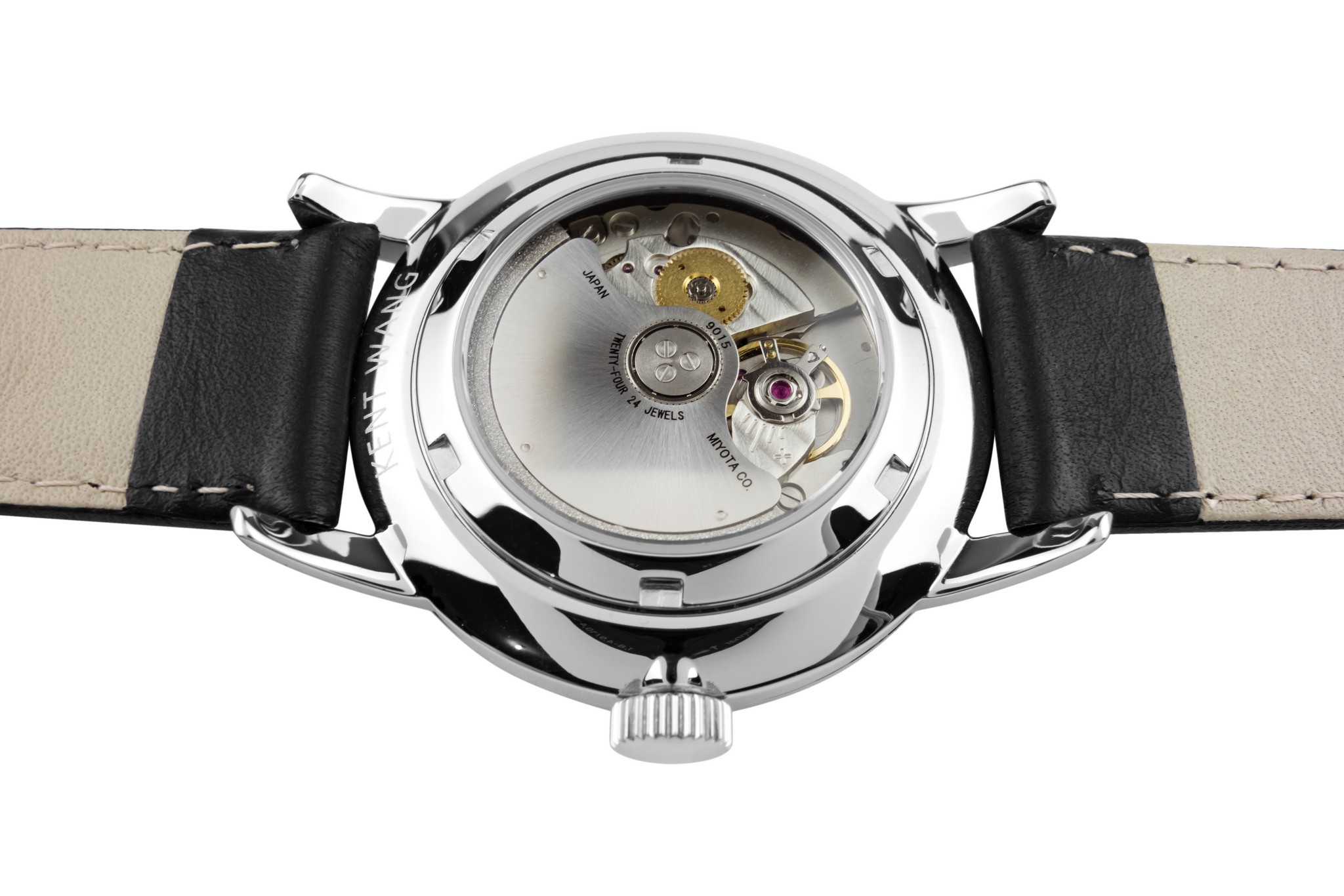
This third iteration of Kent Wang's minimalist watch gets a lot of things right.  At 40mm in diameter (down from the beefier 42mm original), it's poised right at the sweet spot between today's larger watches and the more restrained proportions you'd find in vintage or dedicated dress models.  It features a polished steel case with a scratch resistant sapphire crystal, display case back, and a versatile leather strap that surprised me by managing to fit my 6" wrist on its innermost adjustment hole.  (Most regular-length straps on the market today, or offered standard on men's watches, tend to go only so far as a 6.25" wrist or so.)  As the v3's strap length was, to my understanding, lengthened to accommodate larger wrists up to 8", its ability to accommodate a 2" range in wrist sizes is extremely impressive.  In addition, the Bauhaus's lug width of 20mm means that it is compatible with a wide range of after-market strap options, from NATOs in nylon to unlined straps in shell cordovan.


Of course, it's the dial where this watch earns its Bauhaus moniker.  A simple matte surface with printed (or, in the case of the black version, applied metal) indices form a clean, uncluttered, and utter utilitarian template for telling time.  Eminently readable (especially when contrasted with the white model's blued hands), its only potential flaw - the sameness of the indices could cause one to misread the time if viewed at an off angle - is negated by the date window at 3 o'clock.  The date window's presence is the only real design concession that falls short of the Bauhaus ideal, but it serves enough of a function in utility and improved readability that I think its inclusion adds more to the watch than it detracts.


At under $400 retail (or around $300 if you can catch it during a Massdrop group buy), the Bauhaus V3 offers a tremendous amount of value for its price.  Its Japanese Miyota 9015 movement (upgraded from the Chinese Seagull the original and v2 used) is a solid competitor to the once-ubiquitous ETA 2824-2, and is the workhorse movement that many watch brands turned to after ETA shuttered its supply lines to third parties.  It matches the 2824-2 in virtually every metric except for its winding rotor mechanism, which is uni-directional rather than bi-directional.  While hardly a deal breaker in itself, that fact does mean that it will wind itself a a slightly reduced rate versus a comparable movement with a bi-directional rotor.  It had no difficulty sustaining itself while I used it as my workday wearer, despite my mostly sedentary responsibilities, and if you plan to wear it every day, as I did, it should have no trouble keeping itself wound from day to day.

If you're looking for an extremely versatile yet affordable automatic - perhaps as your introduction to automatic watches in general - Kent Wang's Bauhaus v3 watch is an excellent choice.

Monday, November 17, 2014

Watch Review: Seiko SARB035

The Seiko SARB series is well-known among watch aficionados as one of the greatest value propositions among entry-level mechanical wristwatches.  It offers a handsome range of watches with a classic, subtly Japanese-influenced aesthetic, and automatic, in-house (thanks to Seiko's vertical integration) movements roughly at the $500 price point.  Only the SARB series' limited availability as a JDM - Japanese Domestic Model - limits its global position as one of the most attractive entry points into mechanical watch collecting.


The SARB035 is a cream-dialed offering that tips the scales at a little over $300, depending on currency conversion rate at the time of purchase.  Its 38mm diameter positions it well between the dress watch and everyday watch categories, as it looks just as at home when paired with a t-shirt and jeans as it does sliding under the cuff of a dress shirt.  The front crystal is sapphire, while the display back is Seiko's proprietary hardlex, meaning that the crystals are unlikely to suffer scratches from daily wear, unless you tend to be rough on your watches while they're off your wrist.

While the SARB035 comes with the dependable, solid-end-link bracelet that defines the SARB line, its 20mm lug width means that you have the widest possible options when it comes to aftermarket straps.  (Contrasted with the extremely hard to find 19mm width you'd have to deal with on most modern Grand Seikos, the SARB035 only looks like an even better choice.)  I opted for a shiny aftermarket cordovan strap that I got at the same Yodobashi Camera where I picked up the SARB035.

The the slightly iridescent cream dial and intricate fraction-of-a-second painted indices really play up a strongly appealing vintage vibe, as does Seiko's font, hands, and applied indices selection.  The watch looks on par with automatics in the several thousand dollar range, and offers similar performance with its 6R15C movement, which offers an impressive 50-hour power reserve and usually performs far more accurately than its rating of +25/-15 secs/day.

Image courtesy WatchUSeek Forums.
 The only thing that might give some buyers pause about the SARB035 or the SARB series in general is the lackluster fine adjustment for the included bracelet.  With only two fine adjustment positions in the clasp and one-size links, I've found myself in the unfortunate position of being in between adjustment sizes for both the SARB035 and SARB045's bracelets.  Too tight is never an option, and I can't abide bracelets that shift up and down the wrist like a bangle, which is why I opted for the aftermarket strap.  A minor annoyance for those who intend to wear this watch with a fine leather strap to complement its vintage vibe, but a potential deal breaker for those who intend to use the bracelet and find themselves stuck between adjustment sizes.

With only that small caveat, the SARB035 is a solid value proposition and great entry point into mechanical watches for those who can gain access to this Japan-only beauty.

Monday, July 15, 2013

Watch Radar: Crazy Affordable/Value Find: Casio MTP1183E-7ACF

Cruising Amazon's watch selection, I came across what looks like a strong contender to the Timex Weekender series as an ultra-affordable watch:  This Casio MTP1183E-7ACF clocks in around $20, but from all indications would look right at home with a suit:


The leather strap will probably prove stiff and plasticky, but the fit and finish of the case, dial, and hands seem to put the Weekenders to shame.  I have a spare brown leather strap, a couple of NATOs, and the mesh-like bracelet from my Weekender escapades to try on it when it arrives.  At this price, I couldn't help but try it out.  If it's as good in the flesh as it seems on the screen, I may have found my new top recommendation for an ultra-affordable.

Monday, June 3, 2013

Watch Review: Hamilton Intra-Matic 38mm H38455151


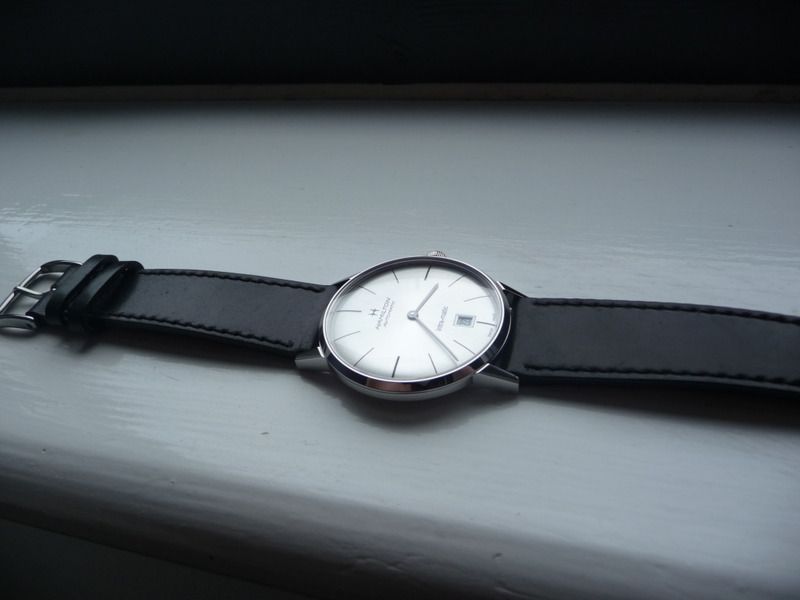
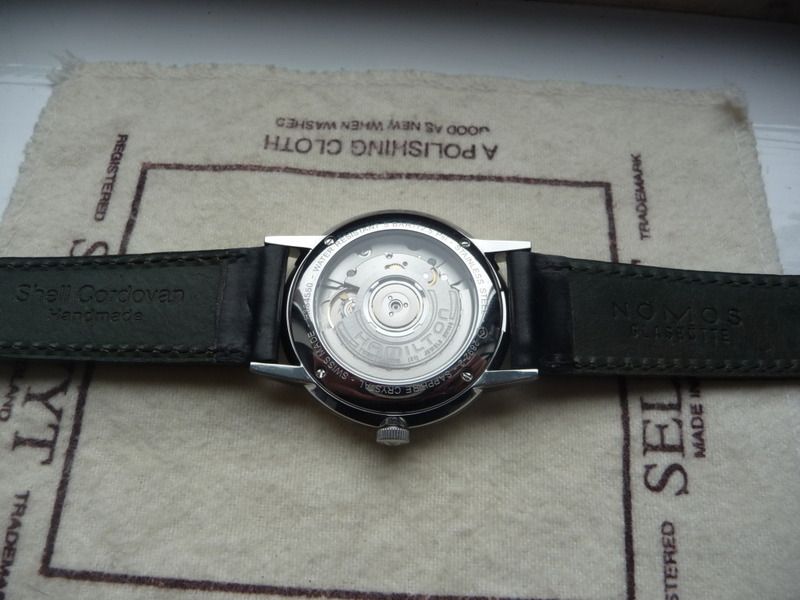
I had thought that I'd managed to kick the watch buying habit after paring down my collection, and especially after a brief Halloween-and-November-themed excursion with the new Seiko Orange Monster SRP309 that ended with a eBay flip.  But a review of the 2012 Hamilton Intra-Matic by James Stacey on A Blog to Watch (formerly A Blog to Read) put the vintage-styled automatic on my radar.  I've bemoaned the trend toward larger case diameters in a previous Watch Primer post, so coming across a freshly released model under the 40mm threshold was a welcome surprise.  The classic styling and silver sunburst dial were immediately attractive, as was the notion of adding an automatic back to my watch box that wouldn't break the bank, and which I would be comfortable wearing daily to work at the courthouse.


With a street price a little over $500, the Intra-Matic is also one of the least expensive options that I know of that is powered by an ETA 2892-2, a slightly thinner and more upscale movement than the ubiquitous ETA 2824.  I've owned two watches in the past powered by this movement or its subsidiary seconds variant - the Omega Seamaster 2253.80, wielding a modified 2892 in its Caliber 1200, and the Xetum Tyndall, employing an ETA 2895, which is the 2892's subsidiary seconds counterpart.  Both came in well above the $1000 mark, so the opportunity to pick up a 2892-powered model with bracelet for less than $600 was too good to pass up.

I found the 38mm case well proportioned for a 6" wrist, the sweet spot for which seems to reside somewhere between 34mm and 38mm.  The dial is preeminently legible, such that it is readable even under low light conditions despite having no applied lume.  I opted for the bracelet version because I suspected the standard-length strap would prove too long for my wrist, and had planned to use a spare black Nomos shell cordovan strap instead.  The watch looks very good combined with the black shell cordovan, but I eventually opted to return it to its stock bracelet, in part so the OCD part of me wouldn't be tempted to swap out the strap for its brown shell cordovan counterpart every time I wore a brown belt and shoes.  While the bracelet tends to make the gorgeous dial blend more into the rest of the watch, the contrast of a black strap really draws attention to it.

Timekeeping on my Intra-Matic has been superb, with less than a minute gained in the several months I've been wearing the watch as a weekday wearer.  The only functional quirk is, regrettably design-based:  the juxtaposition of a hours-and-minutes-only dial with a date display.  Even after several watches successfully weaned me from my fixation with minute markers - the Hamilton Ventura - and second hands - the Citizen Stiletto - the date display would, under normal circumstances, have been a deal breaker.  But the lack of a screw-down crown coupled with my professional responsibilities having made knowing the date at a glance a very welcome convenience, pushed me to take a chance on the Intra-Matic.  I'm very glad that I did.  While I still prefer dateless models in general, the Intra-Matic is a watch that I'd be happy to wear day in and day out for the indefinite future.

Saturday, October 15, 2011

Watch Primer: Dress vs. Casual

This installment of the Watch Primer looks at what factors divide watches into the "dress watch" and "casual watch" categories.  This distinction has become increasingly blurred over time, with quintessential sport watches like the Rolex Submariner becoming known as an acceptable tuxedo accessory.  (The bottom line: No wristwatch should be worn with formal attire like a tuxedo, though a pocket watch is acceptable.)

What Makes a Watch Dressy?

Sleekness and elegance are two qualities of the categorical dress watch.  It is usually thin (say 10mm or less), with a clean, uncomplicated dial design and a smaller diameter - in today's expanding proportions, 40mm or smaller.  A leather strap with matching stitching is dressier than a bracelet, and among bracelets a more intricate design is dressier than the classic three-link oyster bracelet.

The strictest criteria would call for a light-colored dial (white, steel, or beige), and allow for no complications (not even a second hand!), and would likely even omit the extraneous details that minute markers would provide.  Hour indices would tend to be applied, though some classical designs employ laquer for their indices.  At 35mm wide and under 6mm thick, Jaeger-LeCoultre's original Master Ultra Thin is a quintessential example:


What Makes a Watch Casual?

Casual spans a wide range of watches, as it is basically any watch that doesn't meet the criteria above.  Some are purpose-built for certain activities, like diver watches and chronographs.  Some come awfully close to the definition of a dress watch, and could probably fill in for one with most onlookers being none the wiser, but technically stray too far afield by one or two parameters, with diameter and thickness being the usual culprits these days.  Others, such as digital workhorses like the Casio G-Shock and ProTrek lines, are a completely different breed of wristwatch and would seem completely out of place under the sleeve of a suit (presuming they could fit there) to most sensibilities.


What Difference Does It Make?

Admittedly,he distinction between dress and casual watches doesn't mean as much as it used to.  Many classic sport watches like the Submariner and Speedmaster look just as at home half-covered under a suit sleeve as they do accompanying a t-shirt and shorts.  More than that, most people wouldn't be able to tell - or if they could, wouldn't care - what watch is tucked under your sleeve, or whether you're wearing a watch at all.  But for those who care about watches - whether you want to abide by traditional rules, or break them - the first step in gaining mastery over your watch box is to learn the rules.  The age-old writing principle applies here as well: only after learning rules can you hope to bend - or even break - them successful.